

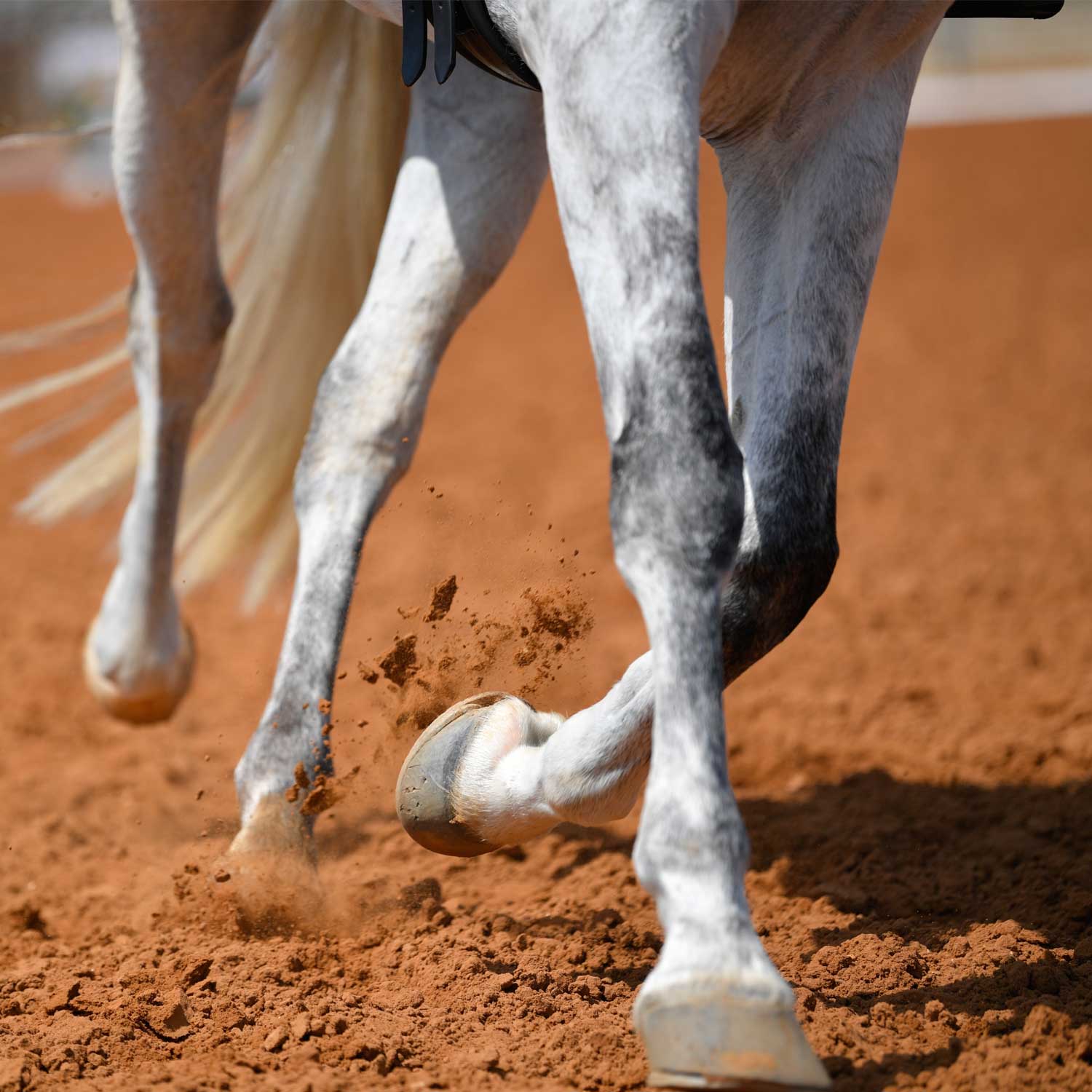
As horses age, train, and perform, their joints naturally experience wear and tear. Just like human athletes, equine athletes can develop joint pain and inflammation that affects mobility, comfort, and performance. Our veterinarians use advanced therapies to help maintain and restore joint health while keeping your horse’s well-being our top priority.
From corticosteroids to regenerative medicine, our goal at Signature Equine is to reduce inflammation, promote healing, and extend your horse’s career. Here’s a closer look at what we’re putting into your horse’s joints and why it matters.
Corticosteroids
Corticosteroids are a class of anti-inflammatory medications commonly used in equine joint care. They are often recommended when a horse is showing signs of arthritis, inflammation, or lameness that interferes with comfort and performance. Your equine vet may suggest corticosteroid injections after diagnosing joint pain through imaging or lameness exams. Commonly used intra-articular corticosteroids include methylprednisolone acetate (Depo-Medrol®), triamcinolone acetonide (Vetalog®, Azium®), betamethasone (Celestone®), and dexamethasone, each varying in potency, solubility, and duration of effect.
Why Corticosteroids Work for Joint Pain Relief
These drugs reduce inflammation by suppressing pro-inflammatory cytokines, inhibiting prostaglandin synthesis, stabilizing lysosomal membranes, and decreasing leukocyte migration within the joint. The result is reduced synovial effusion, decreased swelling, and improved range of motion, allowing horses to return to training or competition more comfortably. While corticosteroids provide rapid and reliable symptomatic relief, they do not reverse underlying joint degeneration, and repeated injections must be carefully monitored to minimize potential cartilage effects.
Regenerative Therapy (IRAP, PRP, Pro-Stride, A2M)
Regenerative therapies harness the horse’s own natural healing abilities to repair and protect cartilage and soft tissues. These treatments include:
- IRAP (Interleukin-1 Receptor Antagonist Protein): Targets and blocks inflammatory proteins in the joint.
- PRP (Platelet-Rich Plasma): Uses growth factors from the horse’s blood to stimulate healing.
- Pro-Stride: A combination of IRAP and PRP that offers dual-action support.
- A2M (Alpha-2 Macroglobulin): A natural protein that helps block destructive enzymes in the joint.
These therapies are most often used in horses with early to moderate joint disease, cartilage damage, soft tissue injuries, or those who haven’t responded well to traditional injections.
How Regenerative Medicine Protects and Repairs Joints
Regenerative therapies provide a biologically based approach to managing conditions like equine osteoarthritis and synovitis, offering an alternative to traditional anti-inflammatory treatments such as corticosteroids. Commonly used modalities include platelet-rich plasma (PRP), autologous protein solution (ProStride®), Interleukin-1 Receptor Antagonist Protein (IRAP), and Alpha-2 Macroglobulin (A2M). Each is leveraging the horse’s own cellular or protein components to influence the joint environment.
The primary mechanisms of action include downregulation of pro-inflammatory cytokines, inhibition of catabolic enzymes, and enhancement of anabolic signaling within articular cartilage and synovium. These effects can reduce synovial inflammation, slow cartilage degradation, and in some cases, stimulate tissue repair, resulting in improved joint function and comfort. Unlike corticosteroid therapy, regenerative treatments do not carry the same risk of cartilage suppression, and when applied early in the disease course, they may support long-term joint preservation.
Polyacrylamides
Polyacrylamides are synthetic, biocompatible hydrogels used for intra-articular (joint) injection to treat osteoarthritis and joint inflammation. These long-acting gels, such as Arthramid® (2.5%) and Noltrex® (4%), are designed to integrate into the joint lining, improving joint health over time without being rapidly broken down. Unlike traditional joint injections like corticosteroids or hyaluronic acid, polyacrylamides are regenerative in nature and provide sustained benefits.
Long-Term Joint Support with Polyacrylamides
Polyacrylamides act as a protective barrier inside the joint, helping to reduce friction, pain, and inflammation. Because they physically reinforce the joint structure, they provide long-lasting relief for horses with chronic joint pain and help extend the working life of a performance horse.
Hyaluronic Acid (HA) – Hyaluronate Sodium
Hyaluronic acid (HA), or hyaluronan, is a glycosaminoglycan naturally present in synovial fluid and articular cartilage. It plays a critical role in lubrication, shock absorption, and maintenance of cartilage structure within the joint. As joints age or face repetitive stress, natural HA levels decrease. An equine veterinarian may recommend HA injections for horses with mild to moderate arthritis or as a preventative treatment for performance horses under heavy workload.
Restoring Cushion and Mobility with HA
By restoring lubrication inside the joint, HA injections reduce friction and improve mobility. They also have mild anti-inflammatory properties, making them an excellent option for maintaining healthy, flexible joints. HA is often used in combination with corticosteroids for enhanced results.
Because HA supports the natural environment of the joint, it’s an excellent option for both younger performance horses and older horses with arthritis.
Stem Cell Therapy
Stem cell therapy is one of the most advanced options available for equine joint care. Products like Strydaflex and Regenaflex from HilltopBio use stem cells derived from horses to regenerate damaged cartilage, ligaments, and tendons. They are typically recommended for horses with significant joint disease, cartilage damage, or injuries that threaten long-term soundness.
The Regenerative Power of Stem Cells
Stem cell therapy offers regenerative power unmatched by other treatments. Stem cells have the unique ability to modulate inflammation, promote tissue regeneration, and release growth factors that support healing. When injected into injured joints or soft tissues, they help the body repair cartilage, tendon, or ligament damage more efficiently than natural healing alone.
Keeping Your Horse’s Joints Healthy
Every horse is unique, and so is every treatment plan. At Signature Equine Hospital, our experienced vets take the time to evaluate your horse’s condition and recommend the therapy that best supports their comfort, mobility, and performance. Whether your horse needs immediate relief from joint pain or long-term regenerative care, our team has the tools and expertise to help.
When Every Step Counts, We’re Here to Help
Joint health is key to keeping your horse active, comfortable, and competitive. If you’ve noticed stiffness, lameness, or reduced performance, it may be time to explore joint therapies. Contact Signature Equine Hospital today to schedule an appointment with one of our equine veterinarians. Together, we’ll create a customized plan to protect your horse’s joints and keep them moving at their best.