

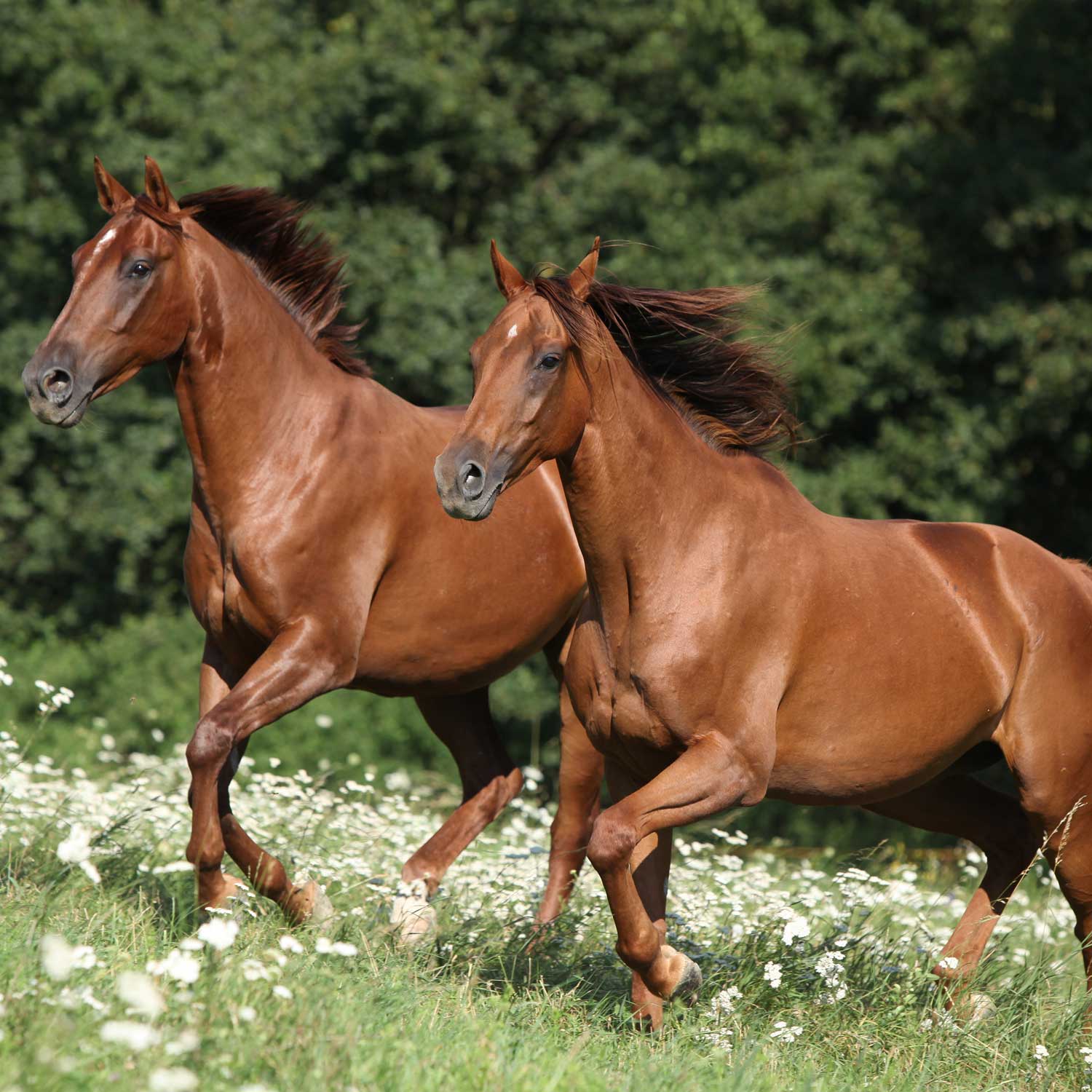
Quarter horses are renowned for their remarkable athleticism, gentle temperament, and versatility across disciplines from ranch work to reining, cutting, and rodeo events. Yet this beloved breed, along with related stock breeds, can carry several inherited genetic diseases that owners and breeders must recognize to maintain equine health. Understanding how to test for and manage these conditions is key to protecting these treasured equine athletes and safeguarding breeding programs.
Let’s discuss some common inherited disorders found in Quarter Horses and related breeds. We will also explore information on testing resources, such as the Quarter Horse & Related Breeds Disease Panel from the Veterinary Genetics Laboratory at UC Davis, and clinical support provided by Signature Equine Hospital.
Hyperkalemic Periodic Paralysis (HYPP)
HYPP is a muscle disorder characterized by episodes of muscle tremors, spasms, or paralysis triggered by high potassium levels. Affected horses may present mild to severe muscle weakness. This condition stems from a genetic mutation affecting sodium channels in muscle cells, mainly present in lines tracing back to the stallion, Impressive. Early detection allows for dietary and management adjustments to minimize episodes.
Hereditary Equine Regional Dermal Asthenia (HERDA)
Known for its debilitating skin fragility, HERDA causes hyper-stretchable skin, severe scarring, and painful lesions primarily along a horse’s back. The genetic mutation impairs collagen formation in the skin. Diagnosis before breeding helps prevent producing affected foals.
Polysaccharide Storage Myopathy (PSSM)
PSSM is a glycogen storage disorder in muscle cells that manifests as stiffness, muscle pain, or reluctance to move after exercise.
PSSM Type 1
PSSM-1, the most common form, has a known genetic mutation in the GYS1 gene. Affected horses accumulate abnormal glycogen and glycogen-like polysaccharides in their muscles, leading to poor performance and tying-up.
PSSM Type 2
PSSM-2 exhibits similar clinical signs but without the GYS1 mutation. Unknown genetic or metabolic causes underlie it, and it remains more elusive to diagnose. While PSSM-2 isn’t yet part of routine panel testing, veterinary evaluation by specialists like our team at Signature Equine Hospital can guide diagnosis via muscle biopsy, clinical signs, and treatment response.
Malignant Hyperthermia (MH)
MH is a life-threatening metabolic disorder triggered by certain anesthetic agents (like halogenated anesthetics) or stress, leading to muscle rigidity, hyperthermia, irregular heart rhythm, and potentially fatal outcomes. Identifying carriers ensures safer anesthesia protocols and preventative planning.
Glycogen Branching Enzyme Deficiency (GBED)
GBED is a fatal disease in foals, where affected individuals cannot properly produce and store glycogen in vital tissues. This leads to weakness, failure to thrive, and often death in early life.
Overo Lethal White Syndrome (OLWS)
OLWS occurs when foals homozygous for the overo gene are born with non‐functional intestines, leading to fatal bowel blockages shortly after birth. This disease is well-recognized in the Quarter Horse population, and breeders should include Overo genetic testing in screening protocols.
Equine Juvenile Spinocerebellar Ataxia (EJSCA)
Equine Juvenile Spinocerebellar Ataxia is a neurological condition that causes uncoordinated movement, balance issues, and difficulty standing. Symptoms appear in foals or young horses and worsen over time. While it is not painful, affected horses are often euthanized due to quality-of-life concerns. Recent genetic research has made it possible to test for the mutation, allowing breeders to avoid producing affected foals.
Myosin-Heavy Chain Myopathy (MYHM)
Also formerly called immune-mediated myositis (IMM), MYHM manifests in two presentations: one with immune-mediated muscle degeneration and another as non-exertional rhabdomyolysis. Both cause muscle loss or breakdown and are linked to a singular genetic variant.
Why Genetic Screening Matters
Testing for these genetic diseases in horses helps you make informed breeding and management decisions. By identifying carriers or affected individuals early, veterinarians and owners can:
- Tailor preventative care (diet, anesthesia planning, exercise regimens)
- Avoid breeding two carriers to prevent affected offspring
- Improve overall herd health and performance longevity in quarter horses
Protecting the Legacy of the Quarter Horse
Safeguarding the future of Quarter Horse bloodlines and related breeds starts with awareness and proactive health screening. At Signature Equine Hospital, we’re dedicated to combating genetic diseases in horses through comprehensive diagnostics, expert care, and personalized management plans. Whether you’re planning for breeding, preparing for performance, or simply prioritizing your horse’s well-being, our skilled team is here to support you every step of the way.
Contact Signature Equine Hospital today to discuss genetic testing, preventative care, or specialized treatment options and help your equine partner thrive for years to come.